Grade diagrams and math with
AI recognition
You get specialized AI models that recognize mathematical notation, circuit diagrams, chemical structures, and geometric proofs where generic OCR fails. Grade partial derivatives and circuit diagrams accurately, something educators thought was impossible for AI.
AI recognizes equations, circuit diagrams, and proofs
Active Queue
Export
Trusted by leading institutions







Standardize Your Assessment Formats
Use our block-based LaTeX editor to create professional, branded question papers that are OCR-optimized for perfect data extraction.

OCR-Optimized Paper Formats
Professional exam paper formats designed for perfect OCR data extraction
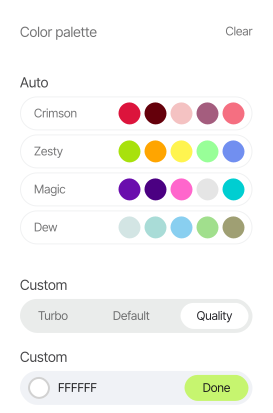
Block-Based LaTeX Editor
Create complex math formulas and branded question papers with drag-and-drop ease.
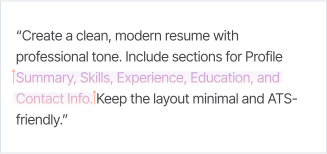

Branded Question Papers
Add your school logo and customize formatting with one click.
Perfect Data Extraction Layout
Optimized spacing and margins ensure accurate OCR processing.
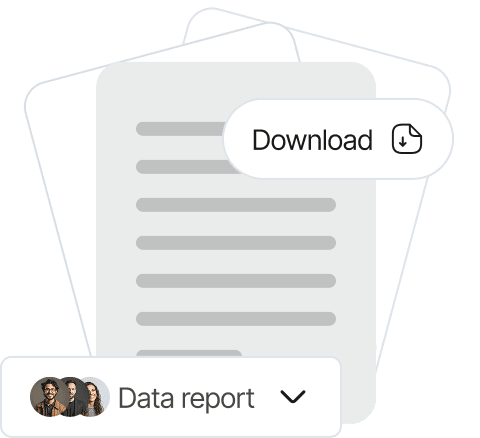
Export & Print Ready
Export professional exam papers in multiple formats for printing.
Question Paper Templates
Pre-built templates for STEM, humanities, and standardized assessments.
Powering Assessment for
Governments, institutions, and AI ecosystems worldwide. Delivering secure, scalable, and accurate handwritten assessment solutions.
Government-Certified AI Handwritten Evaluation
Official assessment workflows for certified exam bodies and large-scale handwritten examinations.


Enterprise Public Sector AI Grading Systems
Enterprise-grade AI grading deployed for national-level academic and workforce assessments.
Custom AI Grading & OCR Infrastructure
Fine-tuned OCR and grading models built specifically for real-world exam handwriting.
STEM Grading Workflow
Intelligent evaluation of mathematical reasoning.
1
Upload STEM Papers
Scanned papers with equations, diagrams, proofs.
2
AI Extracts Content
Equations to LaTeX, diagrams analyzed, steps identified.
3
Step-Wise Evaluation
Each step checked against solution method.
4
Partial Credit Applied
Correct steps get marks even if final answer is wrong.
Math & Diagram Grading FAQ
How does GradeLab grade mathematical equations and formulas?
GradeLab uses specialized AI models trained on mathematical notation recognition. The system converts handwritten equations to LaTeX, identifies mathematical operations, and evaluates step-by-step solutions. It can grade partial derivatives, integrals, matrices, and complex formulas that generic OCR systems cannot handle.
Can GradeLab evaluate geometric diagrams and proofs?
Yes! GradeLab recognizes geometric shapes, diagrams, graphs, and proofs. The AI analyzes diagram accuracy, geometric reasoning, and proof structure. It can evaluate whether students correctly applied geometric theorems, constructed accurate diagrams, and provided valid proofs-something previously thought impossible for AI.
How does GradeLab handle partial credit for math problems?
GradeLab applies step-wise marking where correct steps receive credit even if the final answer is wrong. For example, if a student shows correct method but makes a calculation error, they get marks for the method. This fair evaluation encourages students to show their work and rewards problem-solving skills.
Can GradeLab grade circuit diagrams and chemical structures?
Yes! GradeLab recognizes and evaluates circuit diagrams for physics, chemical structures for chemistry, and technical diagrams for engineering subjects. The AI understands diagram correctness, component placement, and structural accuracy-enabling automated grading of STEM assessments that require visual evaluation.
How accurate is GradeLab on complex math and diagram problems?
GradeLab achieves high accuracy on complex math problems including equations, diagrams, and proofs. The specialized models are trained on millions of educational math problems and continuously improve. For edge cases, human review ensures accuracy while maintaining the speed benefits of AI grading.
Trusted across mathematics, science, and engineering

Thomas Braun
Lecturer, Pure Mathematics, Germany
My students write formal mathematical proofs - induction, contradiction, epsilon-delta arguments. On a convergence proof question, GradeLab correctly identified whether the quantifier structure was right, whether the chosen bound worked, and where the logical chain broke. It did not just check the final line. That is the part that matters.
Dr. Elena Marchetti
Senior Lecturer, Organic Chemistry, Italy
On a question involving an SN2 reaction followed by an E1 elimination, GradeLab correctly identified which students had drawn the arrow from the wrong atom, which had shown the correct leaving group but missed the stereochemical inversion. I have been teaching organic chemistry for fourteen years. That is not a trivial evaluation.
Prof. James Fletcher
Mechanical Engineering, Thermodynamics, USA
GradeLab evaluated a question on entropy generation in a throttling process and correctly identified which students had omitted the system definition, which had applied the steady-flow energy equation incorrectly, and which had confused entropy change with entropy generation. That distinction matters in this subject and it caught it reliably.
Thomas Braun
Lecturer, Pure Mathematics, Germany
My students write formal mathematical proofs - induction, contradiction, epsilon-delta arguments. On a convergence proof question, GradeLab correctly identified whether the quantifier structure was right, whether the chosen bound worked, and where the logical chain broke. It did not just check the final line. That is the part that matters.
Dr. Elena Marchetti
Senior Lecturer, Organic Chemistry, Italy
On a question involving an SN2 reaction followed by an E1 elimination, GradeLab correctly identified which students had drawn the arrow from the wrong atom, which had shown the correct leaving group but missed the stereochemical inversion. I have been teaching organic chemistry for fourteen years. That is not a trivial evaluation.
Prof. James Fletcher
Mechanical Engineering, Thermodynamics, USA
GradeLab evaluated a question on entropy generation in a throttling process and correctly identified which students had omitted the system definition, which had applied the steady-flow energy equation incorrectly, and which had confused entropy change with entropy generation. That distinction matters in this subject and it caught it reliably.

Sophie Laurent
Science Teacher, Lycée Henri IV, Paris
Before GradeLab, I spent every Sunday grading papers instead of being with my family. Now I upload the batch on Friday evening and by Saturday morning, every student has already seen their feedback. That part still surprises me.
Maria Santos
Teacher, Escola Internacional de Lisboa
I teach four classes with 35 students each. I genuinely could not keep up with grading. GradeLab didn't just save me time - it gave me back the ability to actually know where each student was struggling.
Sarah Mitchell
Head of Academics, Wellington Grammar School
We trialled several edtech platforms before GradeLab. What stood out was that it wasn't just grading software - the student feedback loop was instant, and the quality reports for governors were exactly what we needed.
Sophie Laurent
Science Teacher, Lycée Henri IV, Paris
Before GradeLab, I spent every Sunday grading papers instead of being with my family. Now I upload the batch on Friday evening and by Saturday morning, every student has already seen their feedback. That part still surprises me.
Maria Santos
Teacher, Escola Internacional de Lisboa
I teach four classes with 35 students each. I genuinely could not keep up with grading. GradeLab didn't just save me time - it gave me back the ability to actually know where each student was struggling.
Sarah Mitchell
Head of Academics, Wellington Grammar School
We trialled several edtech platforms before GradeLab. What stood out was that it wasn't just grading software - the student feedback loop was instant, and the quality reports for governors were exactly what we needed.