
How to Benchmark AI Grading Accuracy Before Deployment
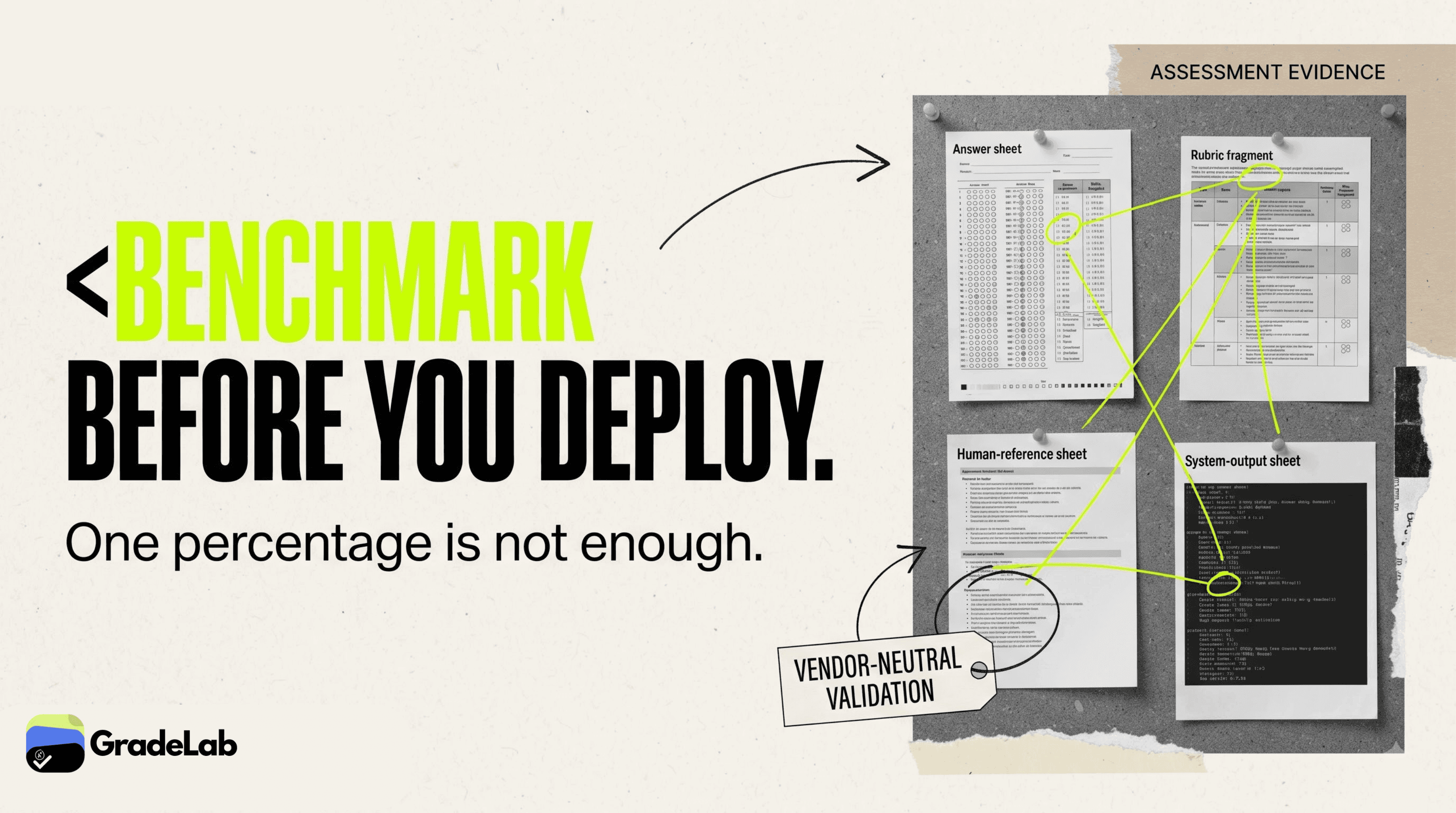
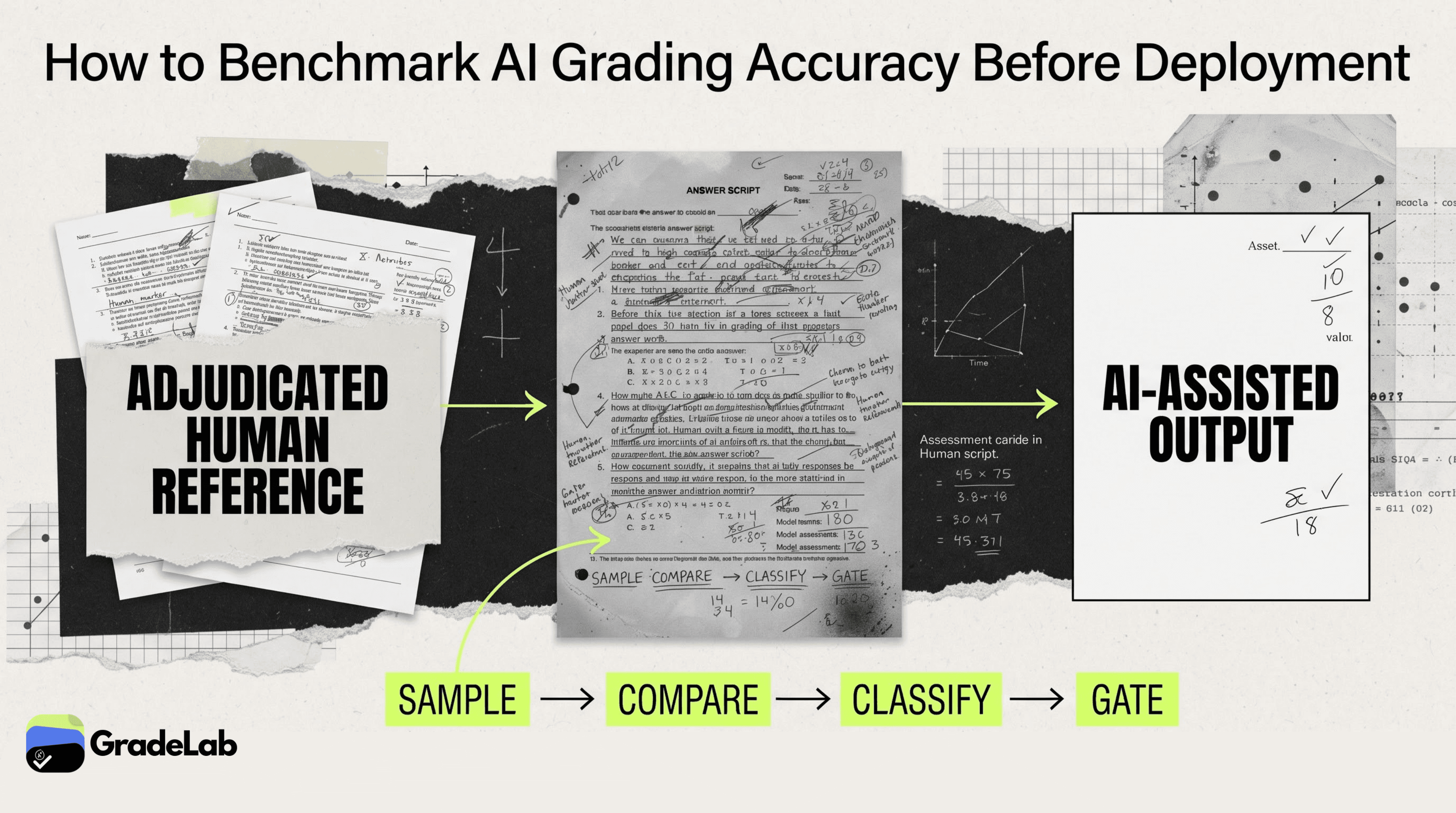 Ask an AI grading vendor for an accuracy figure and you'll usually get one percentage. That number cannot say whether the system works for your rubric, candidates, languages, scans, or decision boundaries. The narrower question is whether this version of the workflow performs well enough for this assessment, under these conditions, before deployment.
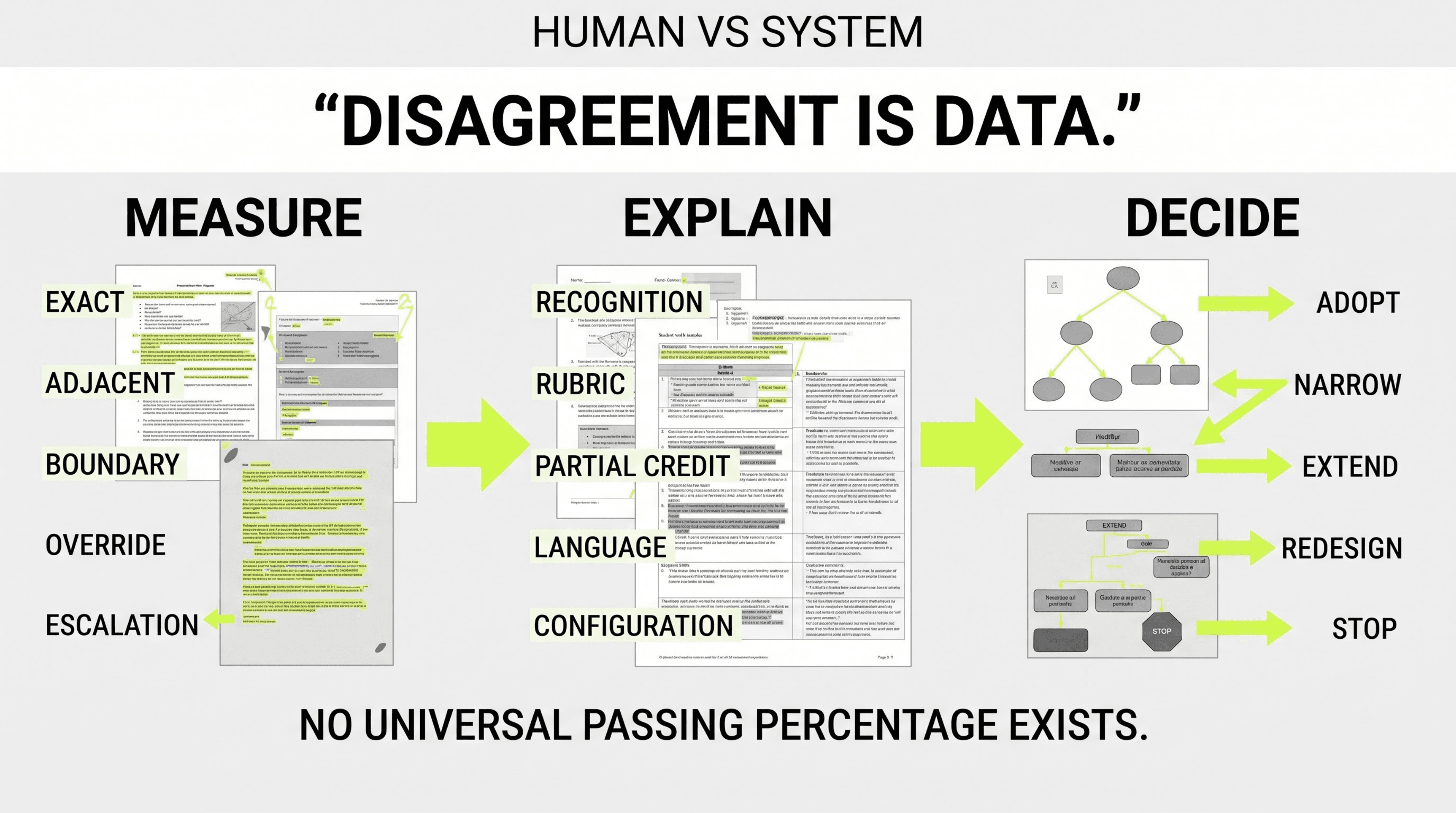
TL;DR: Build a vendor-neutral benchmark before you buy. Define the decision, sample across question type, score band, subject, language, and scan condition, compare against an adjudicated human reference, measure several kinds of agreement, classify every disagreement, and apply acceptance gates set before results are visible. No universal passing percentage exists.
1. Define the decision before the metric
Ofqual's 2026 principles for AI use in marking require evidence specific to the qualification, candidates, construct, and item type. NIST's AI Risk Management Framework asks for testing under deployment-like conditions with generalizability limits documented.
Both point to the same first step: name what the system may assist and what stays human. State the subject, response type, scale, candidates, stakes, and review point, then write the decision the evidence supports. A low-stakes mock test and a regulated qualification need different evidence.
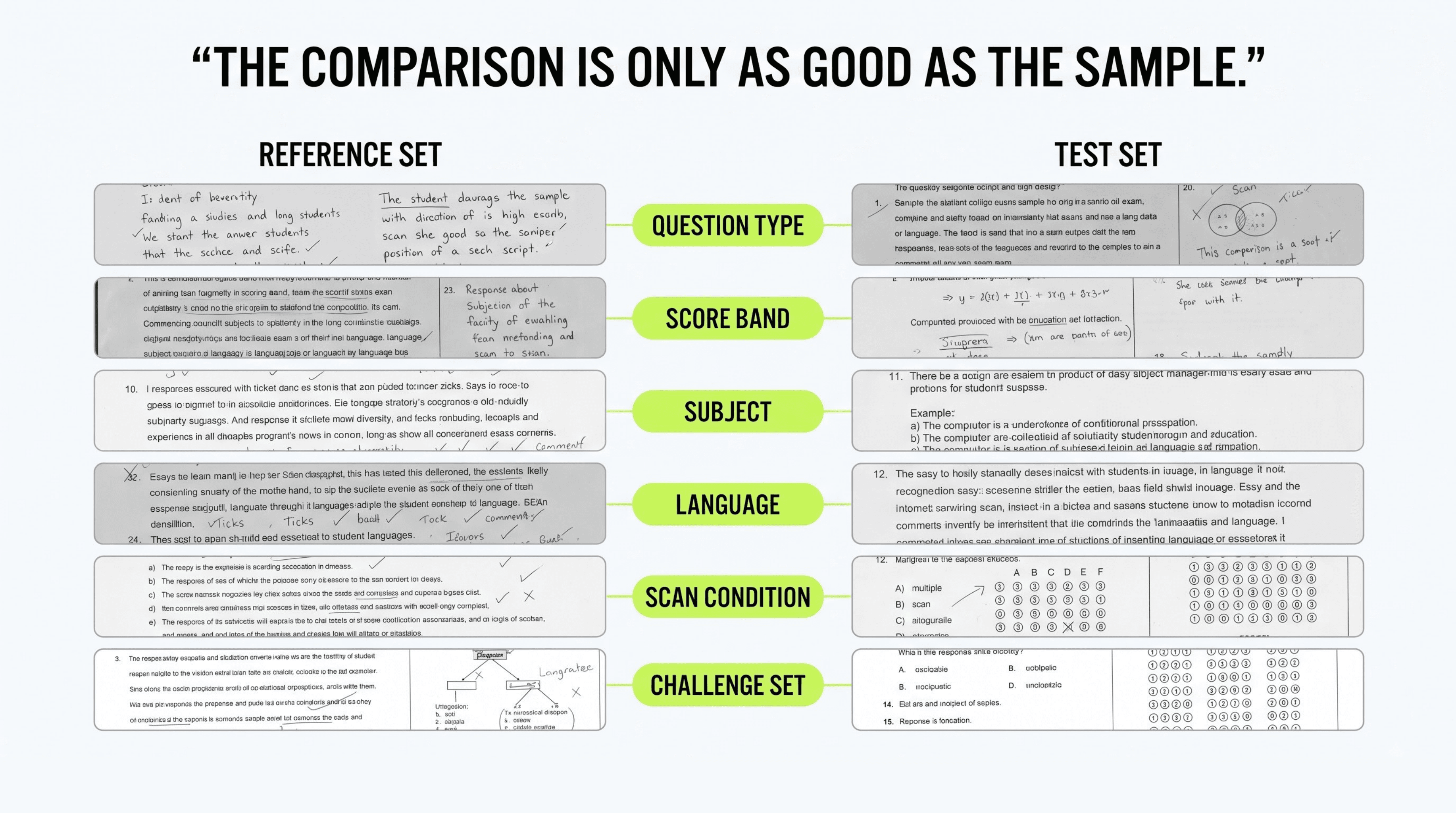
2. Build a representative, stratified test set
Sample across every condition that could shift performance:
- question and response type
- low, middle, high, borderline, and zero score bands
- subjects and constructs
- languages and scripts
- clear, typical, and weak scan conditions
- relevant accommodations
- common, unusual, and difficult responses
Hold back a challenge set until configuration is complete. Otherwise repeated tuning can make the system look strong on known examples without proving it will generalize.
There is no universal sample size. It depends on variation, subgroup analysis, scoring scale, stakes, and the decision. High-stakes work needs qualified statistical or psychometric input.
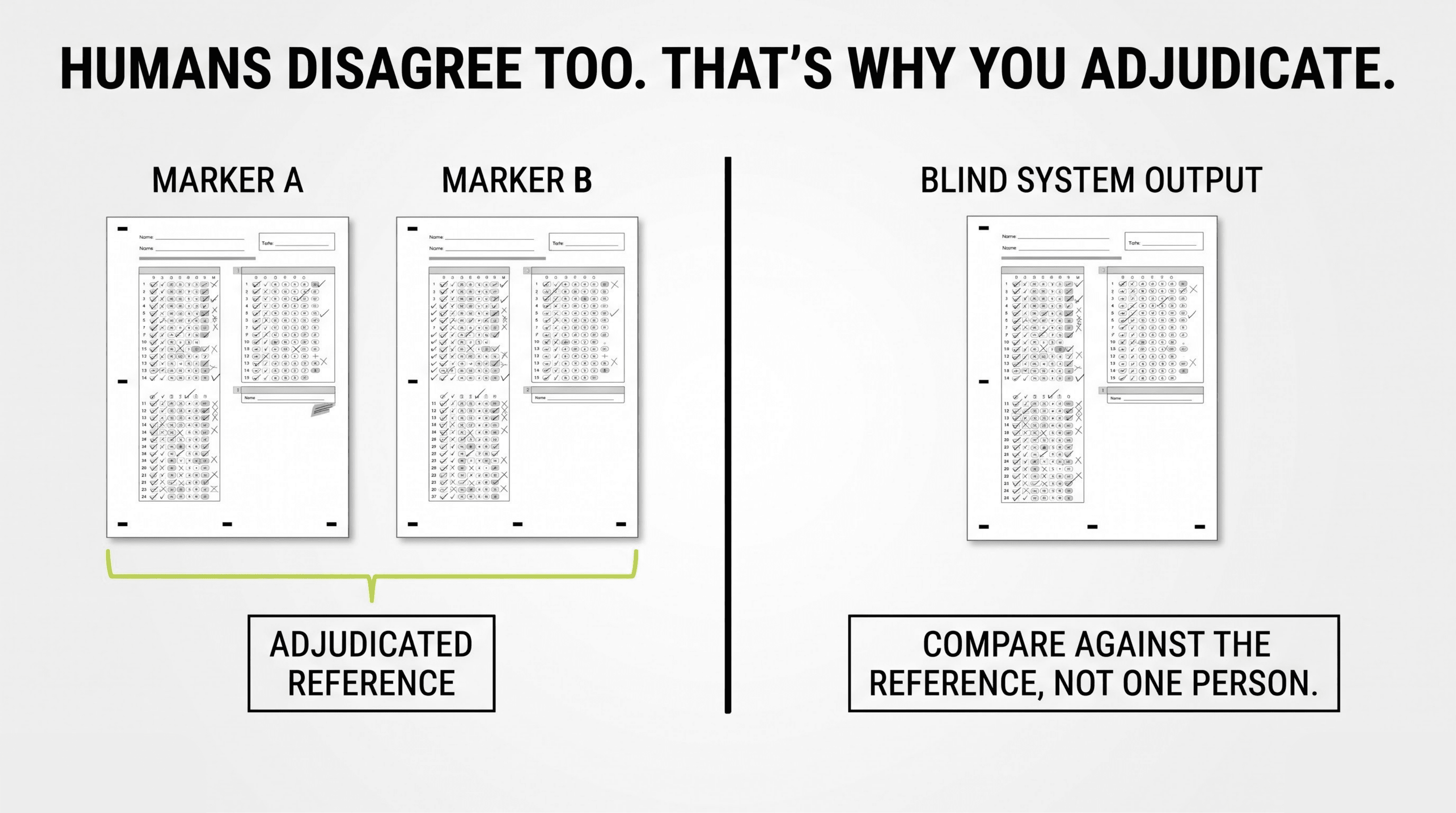
3. Establish a defensible human reference
Should one unreviewed human mark count as perfect ground truth? No. A human reference is itself a measurement process with its own variation.
Freeze the rubric, train and standardize qualified markers, double-mark an appropriate sample, and adjudicate material disagreements. Record the reference and how disagreements were resolved. That record shows whether a gap came from the system, an ambiguous rubric, or ordinary human variation.