Assessment Modernization Guide Without Losing Human Judgment
Assessment modernization is often reduced to a software decision. Scan the papers. Move marking online. Add automation. Connect the gradebook.
That is the easy part.
The harder question is whether the new process still measures what the institution intended to assess. A faster system can produce a weak decision more quickly. A polished dashboard can hide an unclear rubric. An automated recommendation can look authoritative even when the evidence behind it is thin.
Institutions do not need to choose between paper-bound processes and unaccountable automation. The better route is assisted assessment: technology handles suitable work, while trained people retain authority over standards, exceptions, final marks, and appeals.
TL;DR: NIST organizes AI risk work into 4 functions: govern, map, measure, and manage. An assessment modernization strategy should follow the same logic. Set decision rights first, map the real workflow, test performance on local assessments, and keep monitoring after launch. Technology can assist judgment. It should not make institutional accountability disappear.
What does assessment modernization actually mean?
Jisc's 2025 higher-education report groups current change around four broad themes: assessment redesign, digital tools and submission, artificial intelligence, and more meaningful assessment. That is a useful correction to the usual tool-first conversation. Modernization changes the operating model, not merely the marking screen. GradeLab's digital grading overview explains how those workflow changes can be applied to institutional assessment.
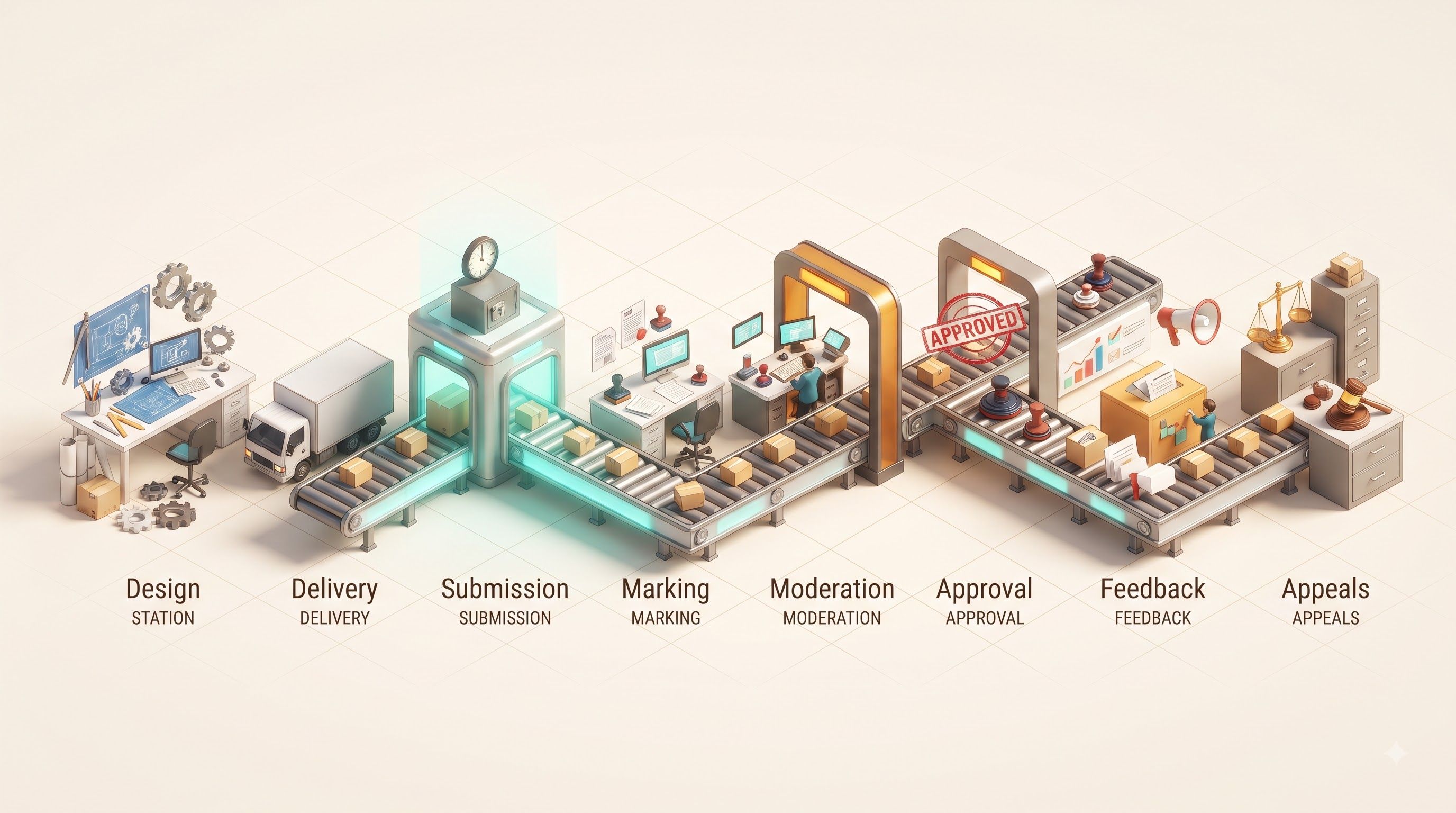
A complete assessment process includes more than scoring. It begins when an institution decides what knowledge or skill an assessment should reveal. It continues through question design, delivery, submission, marking, moderation, result approval, feedback, records, rechecks, and appeals.
Digitizing one step may simply move the bottleneck. For example, scanning answer sheets can remove physical movement between marking centers. But if scripts are indexed poorly, rubrics remain inconsistent, or exceptions arrive by email, the institution has created a digital queue instead of a better process.
Start with three questions:
What evidence should this assessment produce?
Which decisions require academic or professional judgment?
Book a demo and get 90-day trial, free migration, and locked-in 2026 pricing.
Join thousands of educators and institutions using GradeLab's AI-powered grading platform to save time, ensure accuracy, and provide instant feedback to students.
Save 100+ hours per month
AI-powered accuracy & consistency
Instant student feedback
Easy LMS integration
Where does the current process lose time, consistency, or traceability?
Only then should the institution decide what to digitize, automate, integrate, or leave alone.
This is also why modernization should not mean the same design everywhere. A school group running internal examinations has different stakes from a national awarding body. A coaching network needs rapid diagnostic feedback. A university must account for subject diversity, academic regulations, moderation, and appeals. A certification body may place greater weight on audit trails and version control.
The technology should adapt to the assessment system. The assessment system should not be bent around a generic product demonstration.
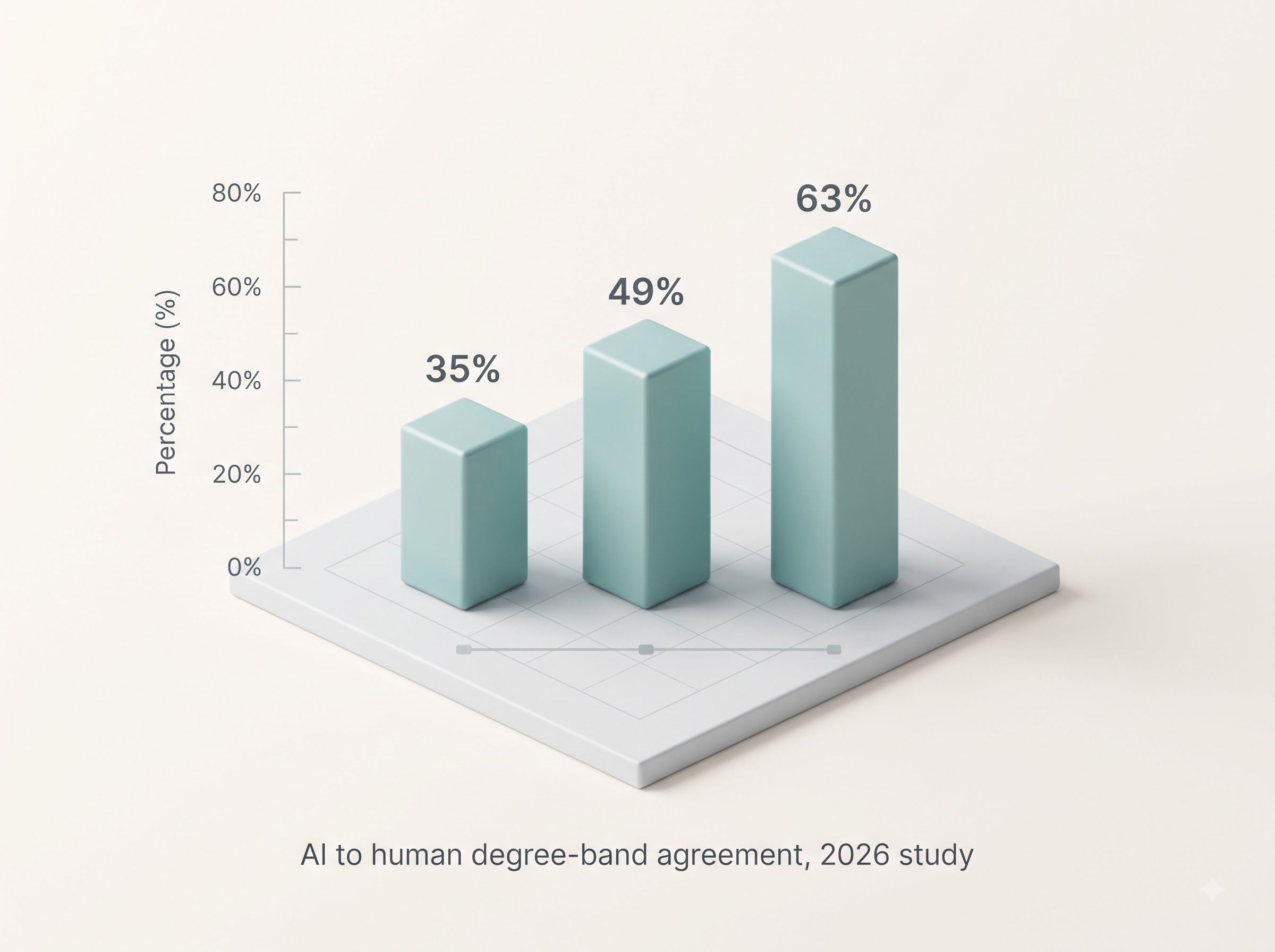
A University of Cambridge-led study published in 2026 tested frontier systems on 761 psychology essays from three UK universities. The systems matched human-awarded degree bands between 35% and 63% of the time across the institutions. That result does not describe every assessment, but it does show why broad claims about automated marking are unsafe. GradeLab's guide to AI-assisted grading provides further context on review-led assessment workflows.
Assessment tasks vary. So do the consequences of getting them wrong.
A constrained factual response may have a narrow set of acceptable answers. An essay can reward an unusual but well-supported argument. A mathematics response may deserve partial credit for correct reasoning after an arithmetic error. A professional certification task may test judgment under ambiguity rather than recall.
Ofqual's 2026 working paper on AI use in marking makes two points that matter beyond England. First, agreement with human marks alone is not enough to establish validity. Second, the evidence required should rise with the stakes and with the influence an automated system has over the final outcome.
Ofqual also states that AI cannot be the sole mechanism for determining marks in the qualifications it regulates. That is a rule for a specific jurisdiction, not a global law. The reasoning travels well, though. Marks sit inside a social and institutional system. They affect progression, admission, certification, and public trust.
Human oversight therefore needs more substance than an “approve” button.
The reviewer must have enough information, time, competence, and authority to challenge the output. They need to know which responses were flagged, why a score was suggested, what evidence was used, and what happens after an override. An institution also needs to watch for automation bias, where people accept a system's recommendation because it appears precise.
Good modernization makes responsibility easier to locate. If nobody can explain who approved a mark, the process is not mature.
Which four controls should guide assessment modernization?
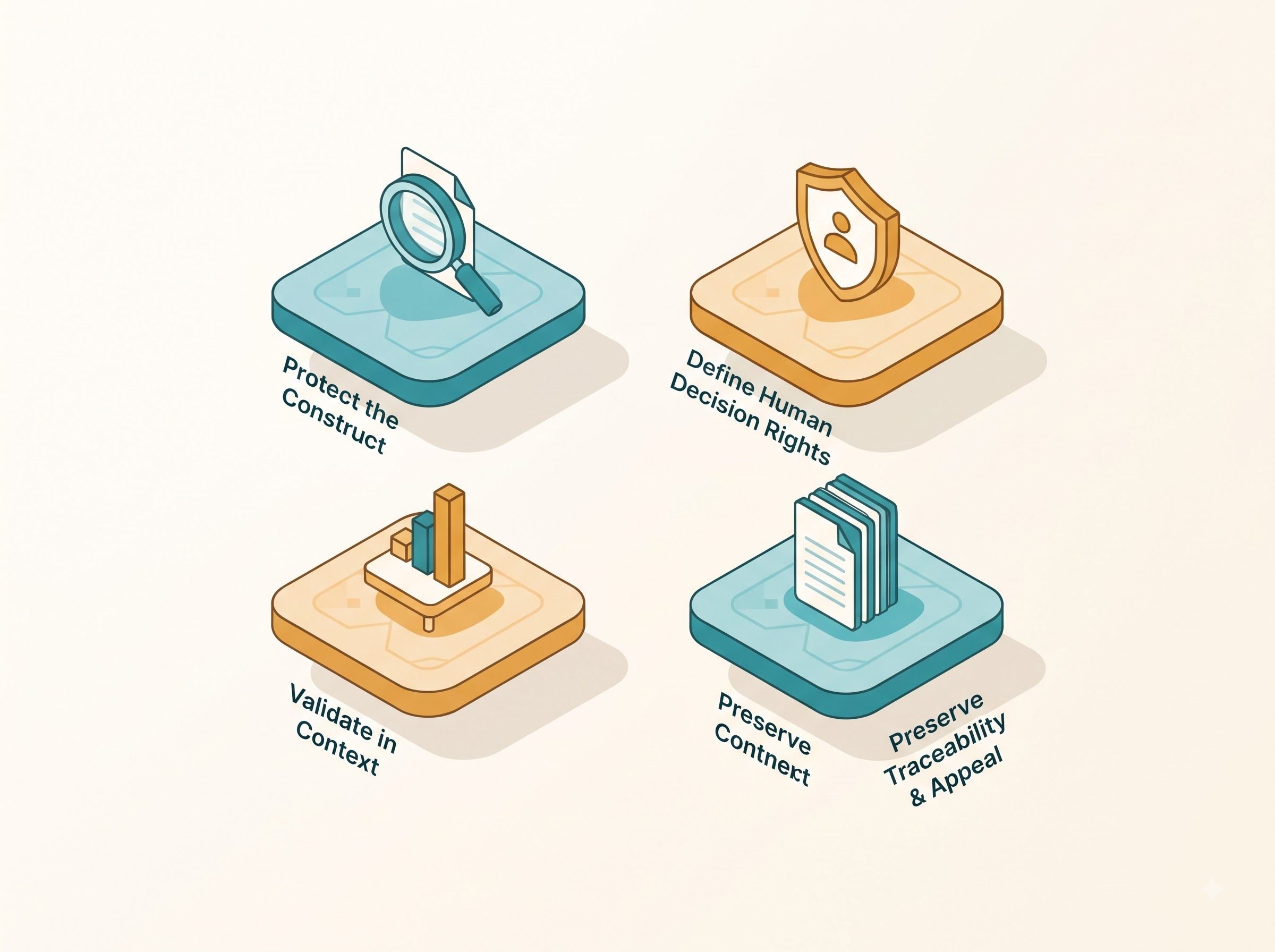
The NIST AI Risk Management Framework uses four functions: govern, map, measure, and manage. Applied to assessment, those functions become four practical controls: protect the construct, define human authority, validate in context, and preserve challenge and traceability.
1. Protect the construct being assessed
The construct is the knowledge, skill, or capability the assessment is meant to measure. Every proposed change should answer a blunt question: could this technology reward something other than the intended construct?
If an essay scorer gives too much weight to polished style, it may undervalue original thinking. If handwriting recognition fails more often for one script or language, scoring differences may begin before the rubric is applied. If a system expects one solution path in mathematics, valid alternative reasoning can look wrong.
Test the complete chain, not just the final score.
2. Make human decision rights explicit
Write down who can configure rubrics, review suggested marks, change a score, approve results, investigate drift, and handle appeals. Do not assume the existing organization chart answers those questions.
The EU AI Act requires effective human oversight for high-risk systems within its scope. It says assigned people need competence, training, authority, and the ability to disregard, override, reverse, or stop a system's output where appropriate. GradeLab's privacy information can support an institution's product-level review alongside its own legal and policy assessment.
Even where the Act does not apply, those are sensible design tests.
3. Validate performance in the real context
NIST says performance or assurance criteria should be demonstrated under conditions similar to deployment. For assessment, that means using representative subjects, question types, score bands, languages, scan conditions, and candidate groups.
Do not validate only on clean, obvious answers. Borderline responses matter more. So do unusual but valid answers, faint scans, crossed-out work, mixed-language responses, diagrams, and accommodations.
There is no defensible universal accuracy threshold for every assessment. Compare the assisted process with the institution's current process, including human-to-human disagreement where that baseline exists.
4. Preserve traceability, challenge, and appeal
A result should be reconstructable. Which rubric version was used? What did the system suggest? Who reviewed it? Was the mark changed? What information was shown to the reviewer? Which version reached the student?
NIST's framework calls for feedback routes that allow affected people to report problems and appeal outcomes. Assessment systems need that connection from the start. An appeal process added after launch usually exposes missing records that cannot be recreated.
These four controls are mutually dependent. Strong validation cannot repair unclear authority. A detailed audit trail cannot prove that the assessment measured the right thing.
Where can technology assist without taking over?
Ofqual describes short-answer responses as generally requiring up to two or three sentences, sitting between closed items and open essays. That range alone shows why institutions should classify tasks before selecting automation. Different response types demand different evidence and different review models. GradeLab's paper grading overview shows how handwritten and mixed-format responses can enter a digital review process.
Useful roles for technology may include:
Capturing and indexing paper answer sheets
Routing responses to markers or specialist reviewers
Checking whether rubric criteria have been addressed
Suggesting a preliminary score for review
Flagging unusual or borderline responses
Comparing patterns across markers, questions, or centers
Returning approved results to another system
Preserving versions, actions, and review history
The word “suggesting” matters. An assisted workflow can reduce repetitive handling without hiding the human decision.
This is where a platform such as GradeLab can be considered. Depending on the verified configuration, an institution may use it to process handwritten or digital responses, apply rubric-based assistance, route work for review, and maintain an institutional approval step. Those capabilities still need local testing against the actual assessment, policy, infrastructure, and risk level.
The same restraint applies to integrations. A link to an LMS or student information system is not merely a convenience feature. Institutions should test identity, permissions, grade transfer, corrections, duplicate records, failure recovery, and audit history. GradeLab's digital grading overview provides a starting point for that technical conversation.
How can one platform adapt to different institutions?
The EU AI Act's Annex III identifies several educational uses that can fall into its high-risk category, including evaluating learning outcomes and determining access or admission. The intended use changes the risk. Institutional adaptability must therefore include governance, not only file formats and languages.
Consider six settings:
Institution
Primary need
Judgment that stays human
Useful technology role
University
Subject-diverse marking and moderation
Academic standards and final approval
Intake, rubric assistance, review routing, records
School group
Shared standards with local flexibility
School-level exceptions and learner context
Templates, permissions, comparative reporting
Examination board
Consistency at high volume
Standard setting, moderation, result release
Script routing, anomaly flags, quality analysis
Coaching network
Fast diagnostic cycles
Academic interpretation and remediation
Bulk intake, preliminary scoring, topic analysis
Certification body
Defensible decisions and auditability
Competence judgment and appeals
Version control, traceability, reviewer workflow
Corporate academy
Mixed written and digital assessment
Role-specific performance judgment
Central administration, scoring support, reporting
Adaptability is not “supports everyone.” That phrase says very little.
Real adaptability means the institution can set roles, rubrics, review thresholds, languages, response types, deployment boundaries, data rules, and integration paths without losing control of the assessment standard.
Ask vendors to demonstrate one difficult workflow from your institution. A multilingual answer. A disputed mark. A corrected rubric. A failed grade transfer. A poor scan. Ordinary cases make every platform look capable.
What should leaders decide before approving investment?
UNESCO's guidance was updated in January 2026 and calls for institutional validation, data protection, inclusion, equity, and a human-centered approach. That puts the decision above the level of a product feature comparison. GradeLab's frequently asked questions can be used to collect product-specific answers after the institution defines its governance requirements.
Before approving a pilot or purchase, leadership should be able to answer seven questions:
Purpose: Which problem are we solving, and how will we know it improved?
Scope: Which qualifications, subjects, response types, and candidate groups are included?
Authority: Who owns rubrics, reviews suggestions, approves marks, and stops the system?
Evidence: What local test will show that the process is valid, fair, usable, and reliable?
Data: What information is processed, where does it go, how long is it retained, and who can access it?
Challenge: How can a student, marker, or reviewer question an outcome?
Operations: What happens when the integration, scanner, model, or network fails?
A vendor demonstration can contribute to those answers. It cannot supply them all.
Leaders should also resist a common procurement mistake: asking one percentage to carry the decision. “What is your accuracy?” sounds precise, but accuracy depends on the task, sample, metric, comparator, and conditions. Ask for the methodology. Then test it locally.
For institutions reviewing paper-heavy workflows, GradeLab's paper grading overview can help frame the intake and review questions. It should be read as product information, not independent evidence.
Frequently asked questions about assessment modernization
The University of Utah's 2026 guidance sets out ten sections covering responsibility, privacy, approved tools, de-identification, suitable uses, validation, transparency, appeals, equity, and core requirements. The breadth of that list is the point: responsible modernization is an institutional program, not a software setting.
What is assessment modernization?
Assessment modernization is the redesign of assessment policy, workflow, technology, data, and governance to improve how evidence is collected, judged, approved, returned, and challenged. Jisc identifies four connected areas of change: redesign, digital tools, AI, and more meaningful assessment.
Does modernization require automated grading?
No. An institution may modernize submission, on-screen marking, moderation, analytics, records, or appeals without automating scores. Ofqual's 2026 paper describes multiple roles for AI, including quality assurance, while keeping people as primary markers.
Can AI make final grading decisions?
The answer depends on jurisdiction and assessment type. Ofqual does not permit AI to be the sole mechanism for marks in its regulated qualifications. The EU AI Act places added duties on certain high-risk educational systems. Institutions need local legal and policy review.
How should an institution test an assessment platform?
NIST recommends testing under conditions similar to deployment. Use representative tasks, candidates, languages, score bands, and edge cases. Compare the complete assisted workflow with the current process, then document limits, overrides, complaints, and monitoring.
Where does GradeLab fit?
GradeLab is designed for institutional workflows involving handwritten and digital assessment. The relevant fit depends on response types, review rules, deployment needs, integrations, and local validation. Its AI grading guide and FAQ are the best starting points for product-specific questions.
Modernize the decision system, not just the interface
NIST's four functions offer a simple closing test: govern, map, measure, and manage. If an institution cannot name the accountable owner, map the full assessment path, measure performance locally, and manage exceptions after launch, it is not ready to scale.
Modernization should make judgment more visible, consistent, and defensible. It should give trained people better evidence and better tools. It should also make it easier to stop when the evidence is not good enough.
GradeLab can support institutions exploring that assisted model. A useful first step is not a generic product tour. It is a review of one real assessment workflow, including the difficult cases.
This article draws on the Ofqual Principles of AI Use in Marking published in 2026, the NIST AI Risk Management Framework Core, Regulation (EU) 2024/1689, Jisc's higher-education assessment research, UNESCO's guidance for generative AI in education and research, the University of Cambridge's 2026 AI in University Assessment study, and the University of Utah's Guidelines for Responsible Use of AI in Grading.