
On-Screen Marking and AI-Assisted Grading Are Not the Same Thing
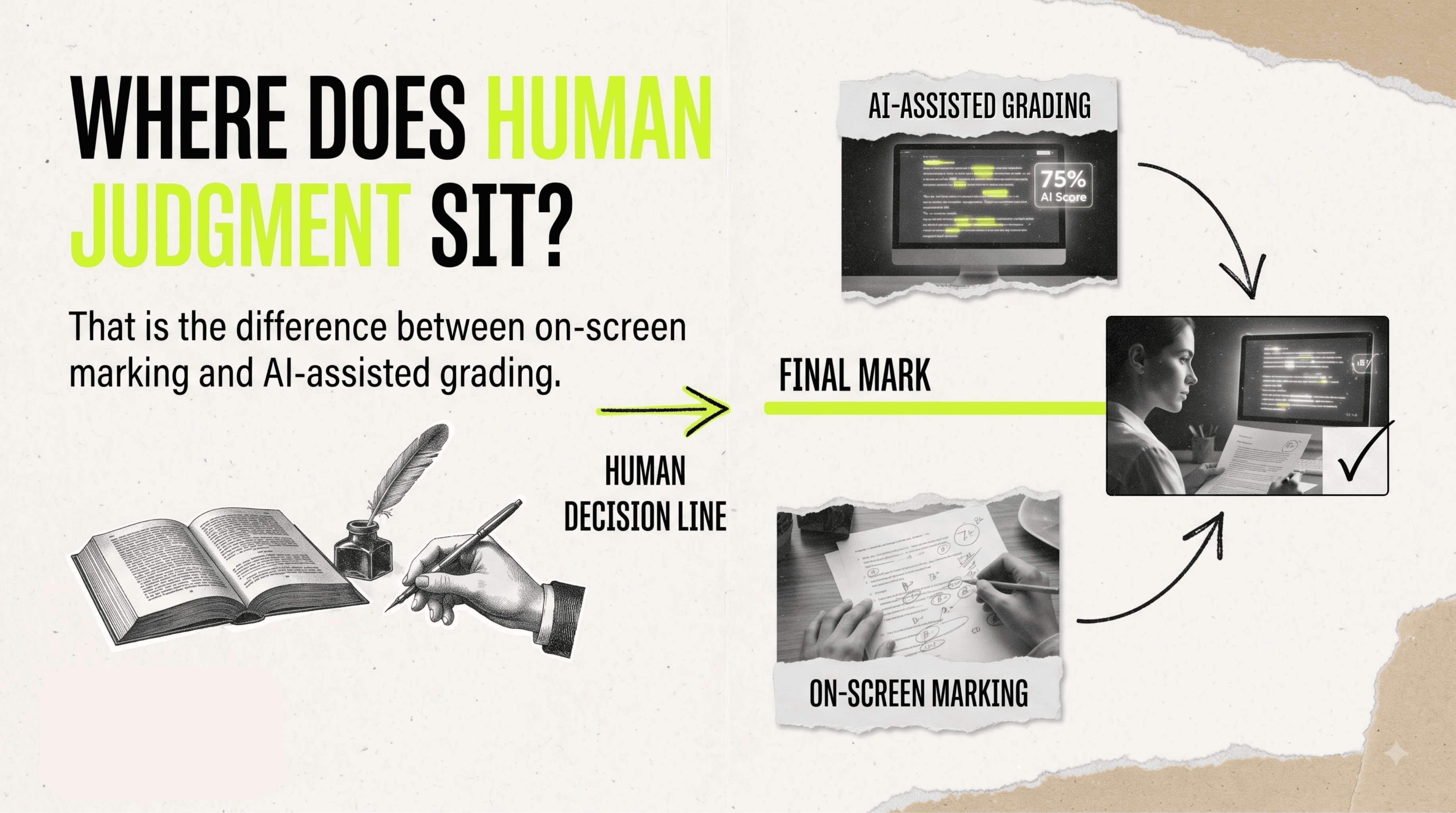
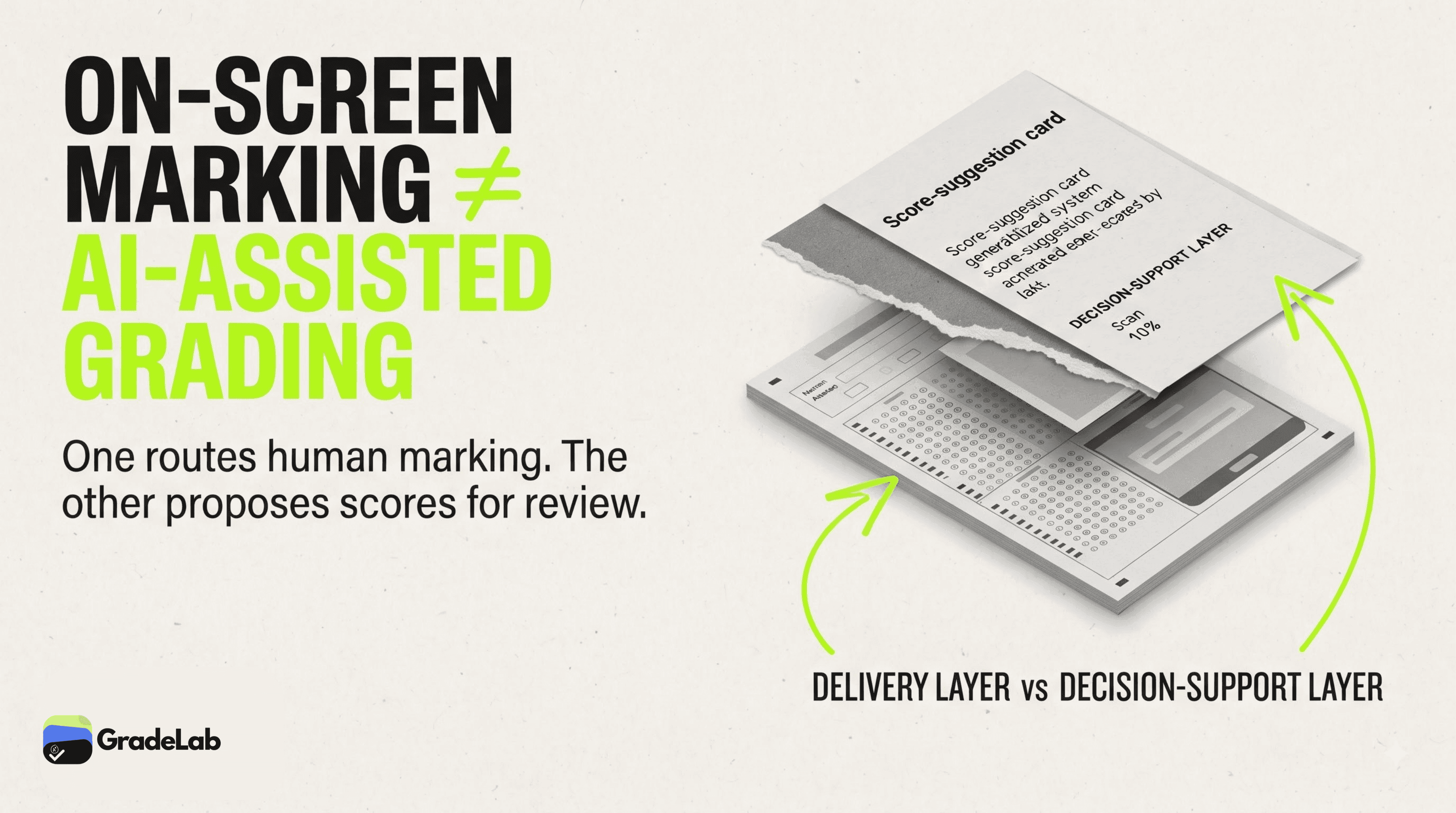
The two terms show up in the same procurement conversations, and they get used as if they meant the same thing. They don't. On-screen marking moves the marking workflow onto a screen; AI-assisted grading adds a layer that proposes scores. One routes and tracks human judgment. The other adds machine support for it.
Mixing them up skews what you buy, how you govern it, and what accuracy you expect.
TL;DR: On-screen marking digitizes the marking workflow, and the human still decides every mark. AI-assisted grading reads responses and proposes scores for a reviewer to accept, change, or escalate. Many institutions need on-screen marking first, then add AI assistance later. Match the layer to your stakes, volume, and risk.
What on-screen marking actually does
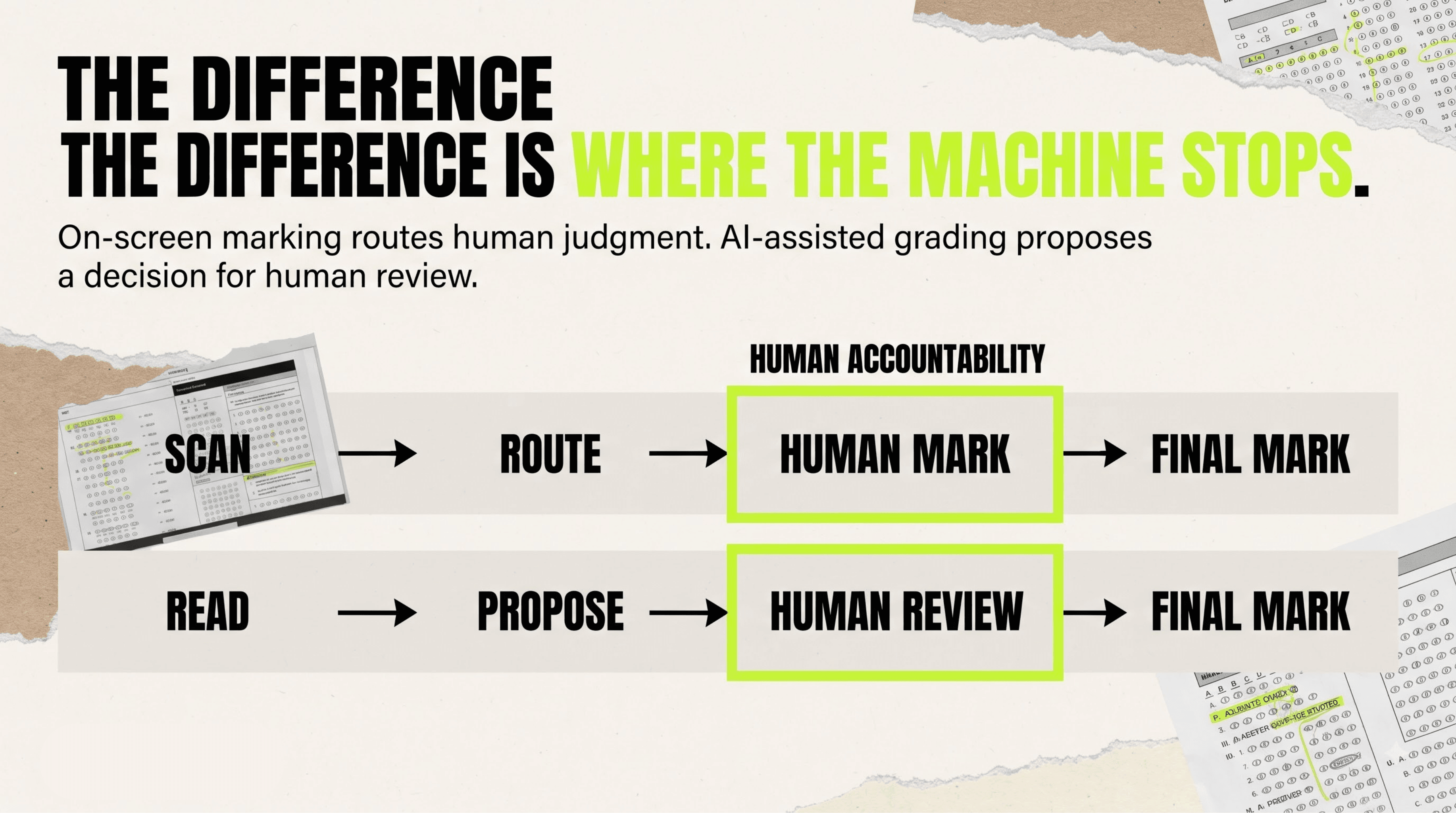
On-screen marking is a delivery layer, not a scoring engine. Answer sheets are scanned and routed to markers on screen. The marker reads the response, applies the rubric, and enters the mark. The system distributes work, tracks progress, enforces double marking, and totals results.
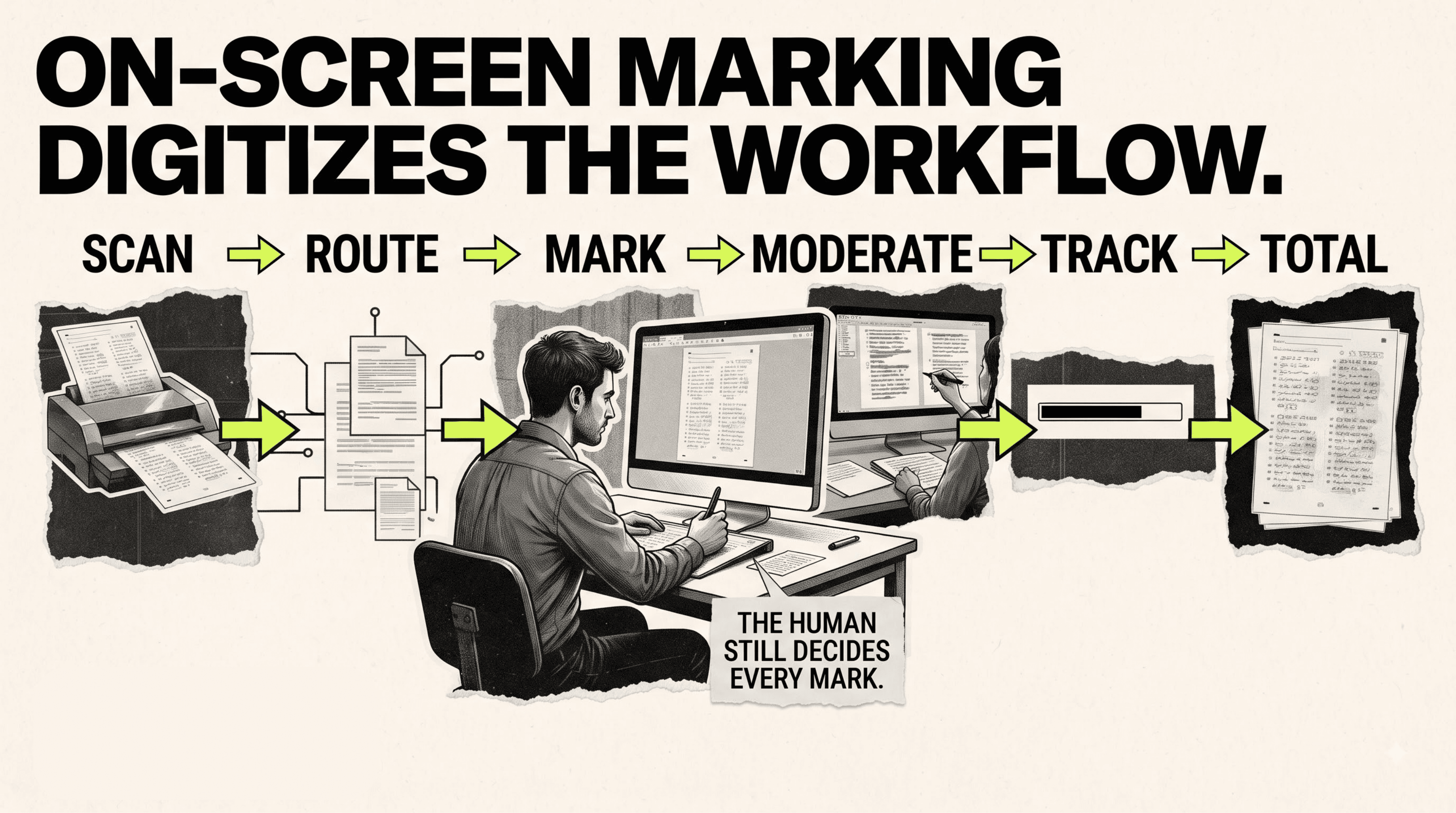
The human still decides every mark. CBSE's move to on-screen marking is digitization, not automated scoring, and its circulars describe implementation rather than results. See GradeLab's on-screen marking overview for the workflow details.
What AI-assisted grading adds
AI-assisted grading is a decision-support layer that sits on top of digitization. The system reads a response, aligns it to the rubric, and proposes a score or a flag. A qualified reviewer then accepts the suggestion, overrides it, or escalates the case.
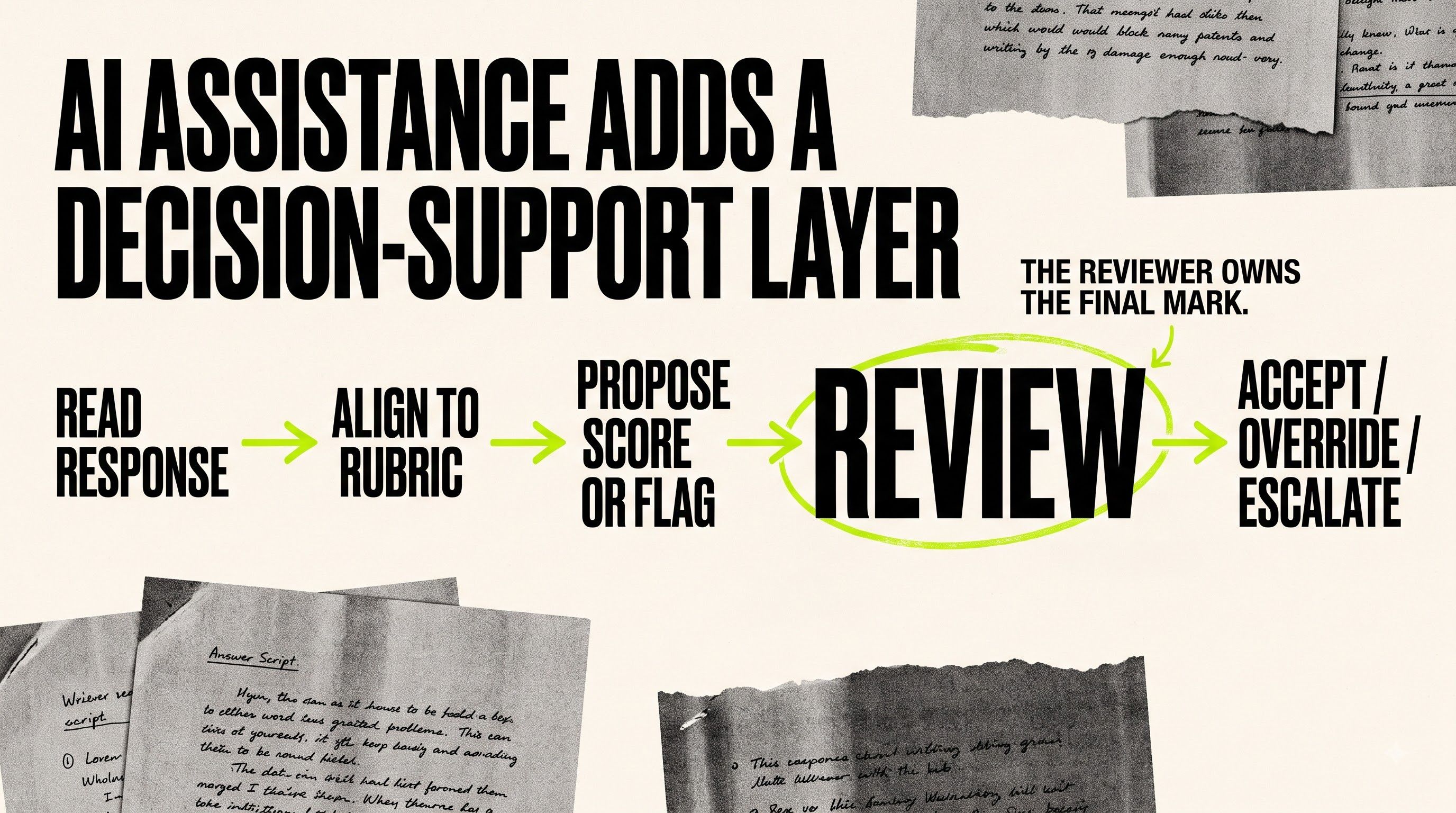
Ofqual's 2026 principles keep human judgment as the accountable step for regulated qualifications, so the reviewer, not the model, owns the final mark. Peer-reviewed research on automated scoring shows agreement with human markers varies by response type and subject, so AI assistance is a separate, validated decision, not a default replacement for marking. See GradeLab's AI grading overview for how the support layer works.
Where the two overlap and where they don't
The two layers can be combined, but they answer different questions. On-screen marking asks how marking work is delivered and tracked. AI-assisted grading asks where a machine may propose a score.